




Contents
The Q-switched Alexandrite laser is a specific type of laser used for various dermatological procedures, including tattoo removal. Here are some key points about the Q-switched Alexandrite laser:
Wavelength:
The Alexandrite laser emits light at a wavelength of 755 nanometers, which corresponds to the red part of the electromagnetic spectrum.
The term “Q-switched” refers to the ability of the laser to produce short bursts of high-energy pulses. This rapid and intense energy delivery is crucial for effectively breaking down tattoo pigments. Alexandrite lasers are generally more effective on lighter skin tones. However, advancements in technology have led to the development of lasers with adjustable parameters to cater to a broader range of skin types, including ethnic skin types.
WHY DR. KORMEILI
Why Patients Choose Dr. Tanya Kormeili
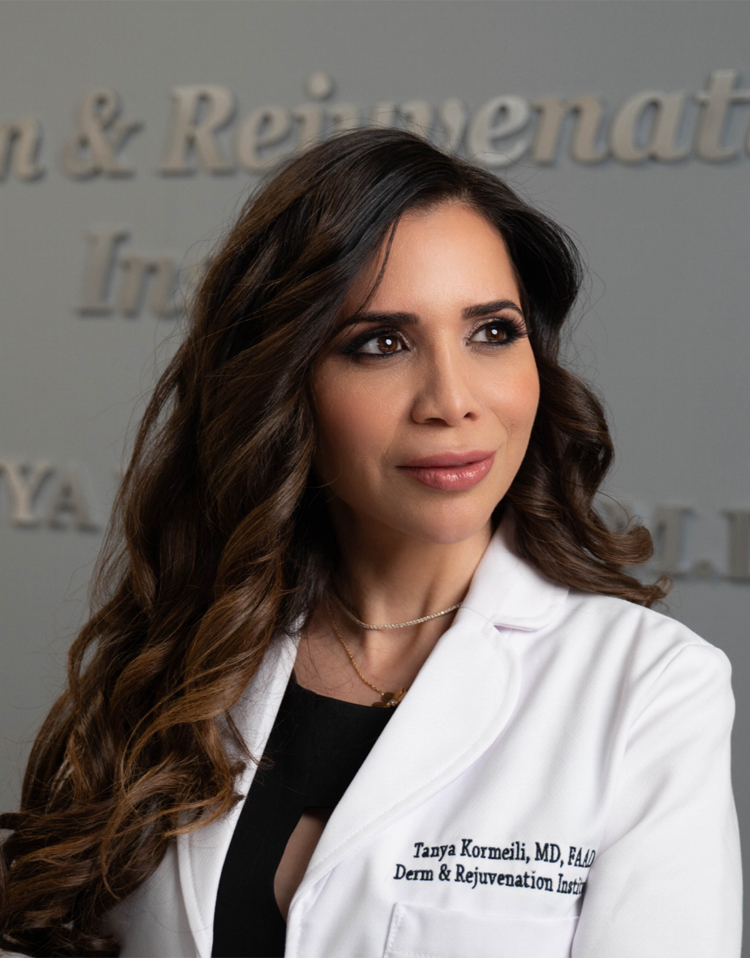
Patients travel to see Dr. Tanya Kormeili, a board-certified dermatologist and dermatologic surgeon in Santa Monica, for complex skin concerns including scarring disorders. Because ingrown hair scars often involve both medical dermatology and cosmetic scar treatments, a dermatologist experienced in both areas can achieve better outcomes.
 Board-certified dermatology expertise
 Advanced laser technologies
 Treatment plans customized for each patient
 Experience treating all skin types
 Combined medical and cosmetic dermatology care
15+
Years of Experience
100000+
Procedures Completed
40000+
Happy Patients
Dermatologist
Board-Certified
Tattoo Removal:
Q-switched Alexandrite lasers are particularly effective in targeting dark pigments, such as black and dark blue ink, commonly found in tattoos. The short pulses of high energy can shatter the ink particles into smaller fragments.
The principle behind Q-switched laser tattoo removal is called selective photothermolysis. This means that the laser energy selectively targets the tattoo pigment while minimizing damage to surrounding skin tissues.
Multiple Sessions:
Just like other lasers are typically used in a series of treatment sessions for tattoo removal. These sessions are spaced several weeks apart to allow the body to naturally eliminate the fragmented ink particles.
Common side effects of Q-switched Alexandrite laser tattoo removal may include redness, swelling, and temporary changes in skin pigmentation. These effects are usually transient and part of the natural healing process.
In addition to tattoo removal, Q-switched Alexandrite lasers are used for various dermatological procedures, including treatment of pigmented lesions, age spots, and certain types of birthmarks.
Before undergoing any laser tattoo removal procedure, it’s essential to consult with Dr Kormeili who can assess your individual case, skin type, and the specific characteristics of the tattoo. We can provide personalized advice and determine the most suitable laser and treatment plan for your needs.


Dr. Tanya Kormeili is a nationally recognized, board-certified dermatologist and Clinical Professor of Dermatology at UCLA’s David Geffen School of Medicine. With prestigious training and extensive experience in both medical and cosmetic dermatology, she is renowned for her expertise in skin cancer treatment, laser and surgical procedures, and advanced aesthetic care. An accomplished researcher and frequent speaker, Dr. Kormeili has contributed groundbreaking work to dermatology literature and earned numerous international awards for her clinical excellence. Dedicated to educating patients and advancing the field, she combines cutting-edge science with a personalized approach to help every patient achieve healthy, radiant skin.