



Contents
- 1 What Happens to Facial Skin in Your 40s and 50s
- 2 Non-Surgical Facelift Options: Treatments That May Help Restore Facial Vitality
- 3 Building a Personalized Non-Surgical Facelift Plan
- 4 Why Choose Derm & Rejuvenation Institute for Your Non-Surgical Facelift
- 5 Frequently Asked Questions
- 5.1 Am I a good candidate for a non-surgical facelift if I have sensitive skin?
- 5.2 How many treatments will I need to see results?
- 5.3 Is there downtime associated with non-surgical facelift treatments?
- 5.4 Can non-surgical treatments be combined in the same appointment?
- 5.5 How does a non-surgical approach compare to a surgical facelift for women over 40?
- 6 Contact Us
A non-surgical facelift for women over 40 is one of the most searched topics in aesthetic dermatology today, and for good reason. As skin changes through the 40s and 50s, many women begin noticing volume loss, texture irregularities, and shifting facial contours. The encouraging news is that a meaningful facial rejuvenation is possible without surgery, general anesthesia, or extended recovery time. At Derm & Rejuvenation Institute, Tanya Kormeili, MD, combines board-certified dermatology expertise with a personalized approach, helping patients explore the right combination of treatments for their individual skin and goals.
What Happens to Facial Skin in Your 40s and 50s
Understanding the biology behind facial aging helps patients make informed choices. After age 40, collagen production declines at an accelerating rate, and the fat pads that give the face its youthful structure begin to shift downward and lose volume. Bone density in the facial skeleton also diminishes gradually, which can cause the overlying skin to appear looser or less supported. Hormonal changes during perimenopause and menopause contribute further, reducing skin hydration, elasticity, and overall radiance.
Common Changes Patients Notice
Patients in their 40s and 50s frequently describe similar concerns: deepening nasolabial folds, a softening of the jawline, hollowing beneath the eyes, uneven skin tone, and fine lines that were once subtle becoming more visible. Vascular changes can also contribute to redness and broken capillaries across the cheeks and nose. Addressing these concerns effectively often requires a layered strategy.
In our practice, we find that patients who understand what is actually happening to their skin respond better to treatment planning. Rather than chasing individual symptoms, we identify the root contributors and build a protocol around them. For patients who are also concerned about spots and growths that have appeared over the years, a moles, spots, and growths consultation can be incorporated alongside aesthetic planning to ensure a comprehensive assessment of skin health. Individual results may vary based on skin type, age, and overall health.
Non-Surgical Facelift Options: Treatments That May Help Restore Facial Vitality
A non-surgical facelift for women over 40 is not a single procedure. It is a curated combination of treatments selected for each patient’s anatomy, skin condition, and goals. At Derm & Rejuvenation Institute, Tanya Kormeili, MD, draws on an extensive menu of evidence-supported options.
Laser and Energy-Based Treatments
Fraxel laser therapy is a clinically studied option that uses fractional laser energy to stimulate collagen remodeling and may help improve skin texture, tone, and the appearance of fine lines over a series of treatments. For patients dealing with persistent facial redness, broken capillaries, or rosacea-related changes, Vbeam laser treatment targets vascular irregularities with precision, helping to restore a more even, luminous complexion. Both technologies are performed in-office and are well-tolerated by most patients.
Injectables and Volumizers
Strategic placement of neuromodulators and dermal fillers can address multiple dimensions of facial aging in a single visit. Neuromodulators such as Botox may help soften dynamic lines around the eyes and forehead, while fillers like Sculptra work gradually to stimulate the body’s own collagen production, potentially restoring facial volume in a natural-looking way.
PRP Therapy for Skin Renewal
Platelet-rich plasma (PRP) therapy uses a concentration of growth factors derived from the patient’s own blood to support skin renewal. Research suggests PRP may help improve skin texture and overall radiance, making it a compelling option for patients seeking a more biological approach to facial rejuvenation. At Derm & Rejuvenation Institute, PRP is often incorporated into a broader non-surgical facelift protocol to complement laser and injectable treatments.
Building a Personalized Non-Surgical Facelift Plan
No two patients arrive with the same skin history, concerns, or goals. A woman in her early 40s with early volume loss and texture irregularities will benefit from a different protocol than a patient in her mid-50s managing significant laxity and vascular changes. This is why a thorough in-person consultation is the foundation of any effective plan.
Why Choose Derm & Rejuvenation Institute for Your Non-Surgical Facelift
Tanya Kormeili, MD, is a board-certified dermatologist and Clinical Professor of Dermatology at UCLA’s David Geffen School of Medicine, with recognition from Castle Connolly as a Top Doctor and consistent inclusion among Southern California Super Doctors from 2016 through 2026. Her training spans both medical and cosmetic dermatology, giving her a depth of clinical perspective that informs every aesthetic consultation.
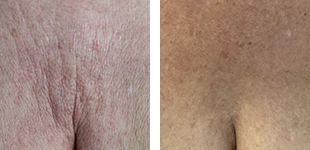
At Derm & Rejuvenation Institute, patients benefit from a comprehensive, one-stop practice that combines medical dermatology with advanced aesthetic services. The proprietary KOR Method guides individualized treatment design, ensuring that each patient’s plan reflects their unique physiology and goals. Whether you are exploring a non-surgical facelift for the first time or refining an existing regimen, our team treats every patient the way we would want other physicians to treat our own family members. We invite you to review our before and after photo gallery to see the range of outcomes patients have experienced, keeping in mind that individual results may vary.
Frequently Asked Questions
Am I a good candidate for a non-surgical facelift if I have sensitive skin?
Sensitive skin does not automatically exclude a patient from non-surgical rejuvenation options. Tanya Kormeili, MD, evaluates each patient’s skin type and history before recommending any protocol.
How many treatments will I need to see results?
The number of sessions varies based on the treatments selected and your individual skin goals. Laser treatments such as Fraxel are typically performed in a series of sessions spaced several weeks apart. Injectables may show results more quickly, while collagen-stimulating options like Sculptra or PRP work gradually over months.
Is there downtime associated with non-surgical facelift treatments?
Most non-surgical options involve minimal downtime for most patients, though this depends on the specific treatment and individual response. Laser treatments may involve temporary redness or mild peeling for several days. Injectables typically allow patients to return to normal activities the same day. Your provider will discuss what to expect for your specific plan so you can prepare accordingly.
Can non-surgical treatments be combined in the same appointment?
In many cases, yes. Combining treatments in a single visit can be efficient and clinically appropriate, depending on the specific modalities and the patient’s skin condition. Tanya Kormeili, MD, and the team at Derm & Rejuvenation Institute design combination protocols thoughtfully, sequencing treatments to support one another and maximize overall outcomes.
How does a non-surgical approach compare to a surgical facelift for women over 40?
Non-surgical options generally involve less recovery time and carry fewer procedural risks than surgical alternatives, though they may require ongoing maintenance to sustain results. Surgical options may be appropriate for patients with more significant laxity who desire longer-lasting structural changes. Derm & Rejuvenation Institute offers both surgical and non-surgical options, and Tanya Kormeili, MD, can help you understand which approach, or combination, best aligns with your goals.
Contact Us
If you are ready to explore a non-surgical facelift and take the next step toward a more refreshed, confident appearance, Derm & Rejuvenation Institute is here to guide you. Tanya Kormeili, MD, and her team bring board-certified expertise and a genuinely personalized approach to every patient. Complete the online contact form to schedule your consultation and let us help you build a plan that fits your life.

Dr. Tanya Kormeili is a nationally recognized, board-certified dermatologist and Clinical Professor of Dermatology at UCLA’s David Geffen School of Medicine. With prestigious training and extensive experience in both medical and cosmetic dermatology, she is renowned for her expertise in skin cancer treatment, laser and surgical procedures, and advanced aesthetic care. An accomplished researcher and frequent speaker, Dr. Kormeili has contributed groundbreaking work to dermatology literature and earned numerous international awards for her clinical excellence. Dedicated to educating patients and advancing the field, she combines cutting-edge science with a personalized approach to help every patient achieve healthy, radiant skin.